
Survival: water, food and sleep
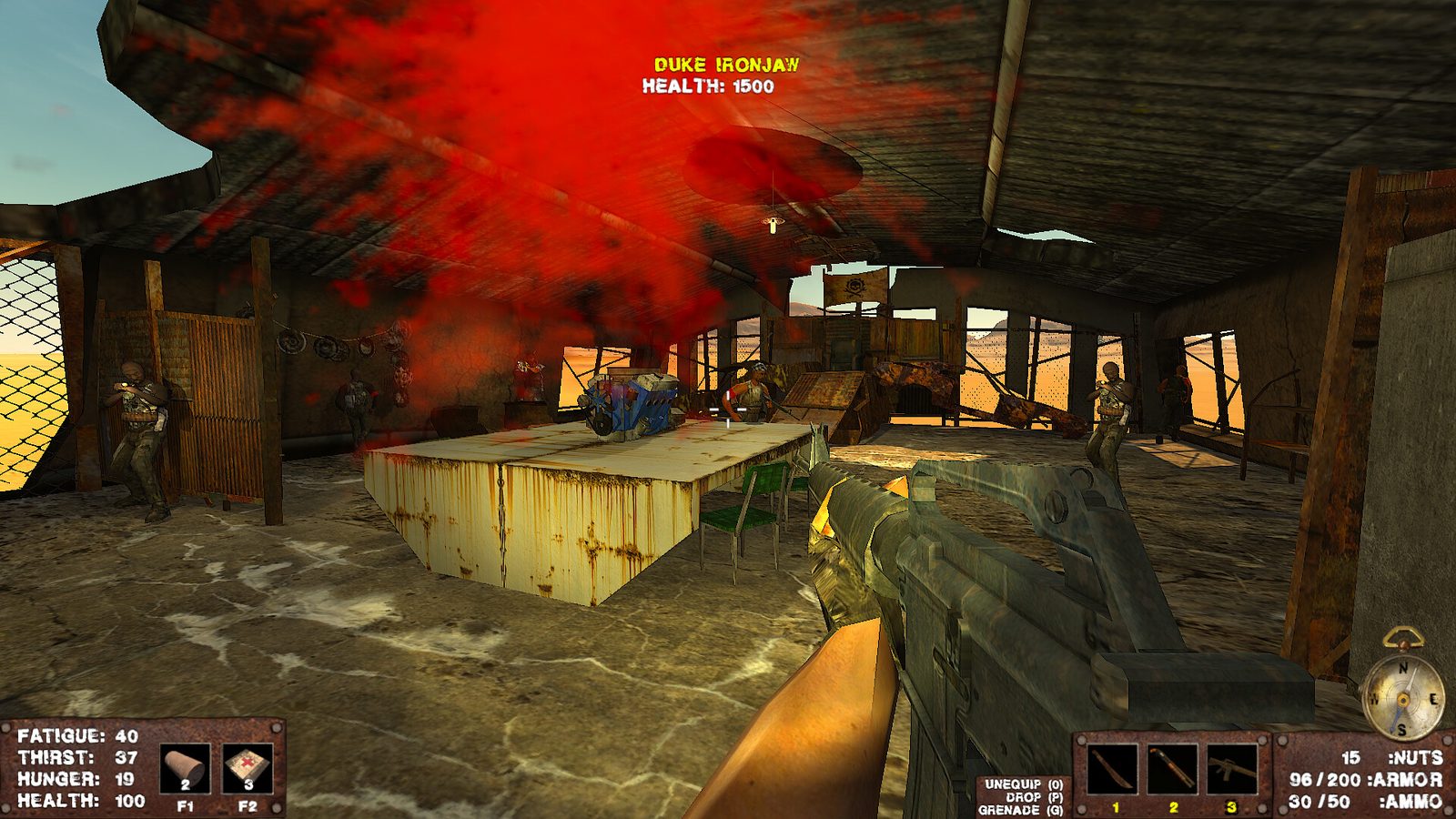
Apocalypter's survival meters — fatigue, thirst, hunger, health — move slowly, but one of them is special: water is also your car's coolant, so every drink you take has a second consumer. Understanding the water loop is the difference between a comfortable run and a death spiral.
Advertisement
Pairs with: Parts, condition and maintenance · Tips and frequently asked questions · Character gear and upgrades
The four meters
| Meter | What drains it | What refills it |
|---|---|---|
| Thirst | Time, heat, driving exertion | Water cans, dew collectors |
| Hunger | Time | Dog food, nuts, beans, cooked meat, maggots |
| Fatigue | Time, long drives | Sleeping (a bed or a safe camp) |
| Health | Damage, dehydration, starvation | Bandages (slow), first aid kits (fast) |
Read these character meters separately from the vehicle's temperature, oil and fuel gauges. Turning off personal upkeep does not repair the car or fill its radiator.
The water loop, in full
Water has three mouths to feed:
- You. Carry drinking water separately from the amount you intend to pour into the radiator.
- The radiator. Monitoring temperature and topping up coolant is the water sink that actually kills runs. Under-sized or low-condition radiators drink water faster than you find it.
- Plants. Weed and tobacco planters on the car need watering if you are growing a crop; the full game's pitch explicitly includes growing plants off your vehicle.
Sources of water, best to worst:
- Water cans — the staple; found in structures and camps, common enough that players stop worrying once they know where to look.
- Large dew collectors — at faction camps; the dog boat camp and Buzzgut's base are the two named in the discussions. Free, and they refill.
- Portable dew collector — a supplementary supply for a moving base. Check the amount collected rather than treating a reported demo yield as a guaranteed production rate.
Food: the maggot economy
Apocalypter's food chain is honest about the apocalypse. In rough usefulness order:
| Food | Where it comes from | Notes |
|---|---|---|
| Dog food | Houses, camps, wrecks | The early staple; zero shame |
| Rusted nuts | Loot and trading | Currency for purchases, not a food allowance |
| Maggots | Camp farms and the portable system listed for the released game | Sustainable; the demo's camp farm refills |
| Mystery meat | Butchering animals and mutants | Needs a cook; the store page is proud of this |
| Cooked meals | Campfires | The best hunger-per-slot once you commit |
Butchering requires downing the animal first, and cooking needs a fire — both are full-system features the store page describes and the demo demonstrates in miniature. In the demo, the practical answer to hunger is: dog food and nuts early, maggot farm visited on schedule, cooking when settled.
Sleep and the night
Night in the demo is pitch black — not a mood, a mechanic. The practical loop:
- Plan the end of the day around a known sleepable spot: a faction camp with friendlies, a claimed building, a bed.
- Sleep in multi-hour blocks; choose the interval for your route rather than assuming a fixed four-hour requirement.
- Sleep restores fatigue and skips the most dangerous hours. Night walkers are real, and a car's headlights are a dinner bell.
Sleeping with fatigue disabled
The September 26 update fixes sleeping while fatigue is disabled and removes the minimum tiredness requirement for sleep. It also fixes the sleep UI remaining after cancelling. If one of those launch faults matches your run, update before treating it as a missing bed or a new survival rule.
The Disable Sandstorm switch was added on September 30 under Settings → Gameplay Cheats. Disabling thirst or sandstorms changes those hazards; it does not fill coolant, food containers or a fuel tank. Settings and cheat options.
The first five survival upgrades
- Binoculars — see water and fuel structures before committing route and daylight to them.
- Water can(s) — two cans turn the water loop from panic into logistics.
- A sleeping plan — a known camp within a fuel-tank of your operating area.
- Backpack — carry food, water, tools together without choosing.
- Repair box — helps keep the vehicle usable between supply stops.
Get those five and the survival meters stop being the game — which is when Apocalypter gets good.