
Parts, condition and maintenance
A car in Apocalypter is a set of systems that each fail differently. Use condition and the vehicle gauges to plan maintenance, then separate a mechanical problem from the released game's named control and load-time fixes. Older demo observations below are examples, not universal failure thresholds.
Advertisement
Pairs with: Car customization and builds · Survival: water, food and sleep · Factions, traders and warlords
Engines: the part everything else answers to
Engines set the ceiling on what the rest of the car can do:
- Power vs. cost — a bigger engine moves a loaded car better but demands more fuel, more cooling and better oil discipline. Upgrading the engine without upgrading the cooling and fuel plan is the single most common way players strand themselves in the demo.
- The oil temperature gauge matters — engines need motor oil, and the demo's gauge cluster tracks oil temperature; if it climbs past normal while driving, stop and check oil and coolant before you cook the engine.
- Swaps are expected, not exotic — the developer's showcase for the part system is a Mercedes OM617 diesel dropped into a motorcycle chariot. If you found an engine, you can fit it; the question is whether the rest of the car agrees.
V6s are common finds in the demo's wrecks; the ecosystem of engines grows in the full game.
Radiators: sizing, water, and the #1 lesson
The radiator is where Apocalypter's survival and vehicle systems collide, because the radiator drinks your drinking water:
- Water is coolant. Refill the radiator from the same cans you drink from, or from dew collectors.
- Size to the engine. A small radiator behind a big engine runs hot and loses water constantly. A player in the official discussions burned about 12 liters trying to cool a V6 with a small radiator; switching to medium fixed it.
- Condition compounds everything. A radiator at low condition leaks faster — fix or replace it before you blame anything else.
- Large dew collectors live at faction camps (the dog boat camp and Buzzgut's base are called out in the discussions). Those are your free top-up stations.
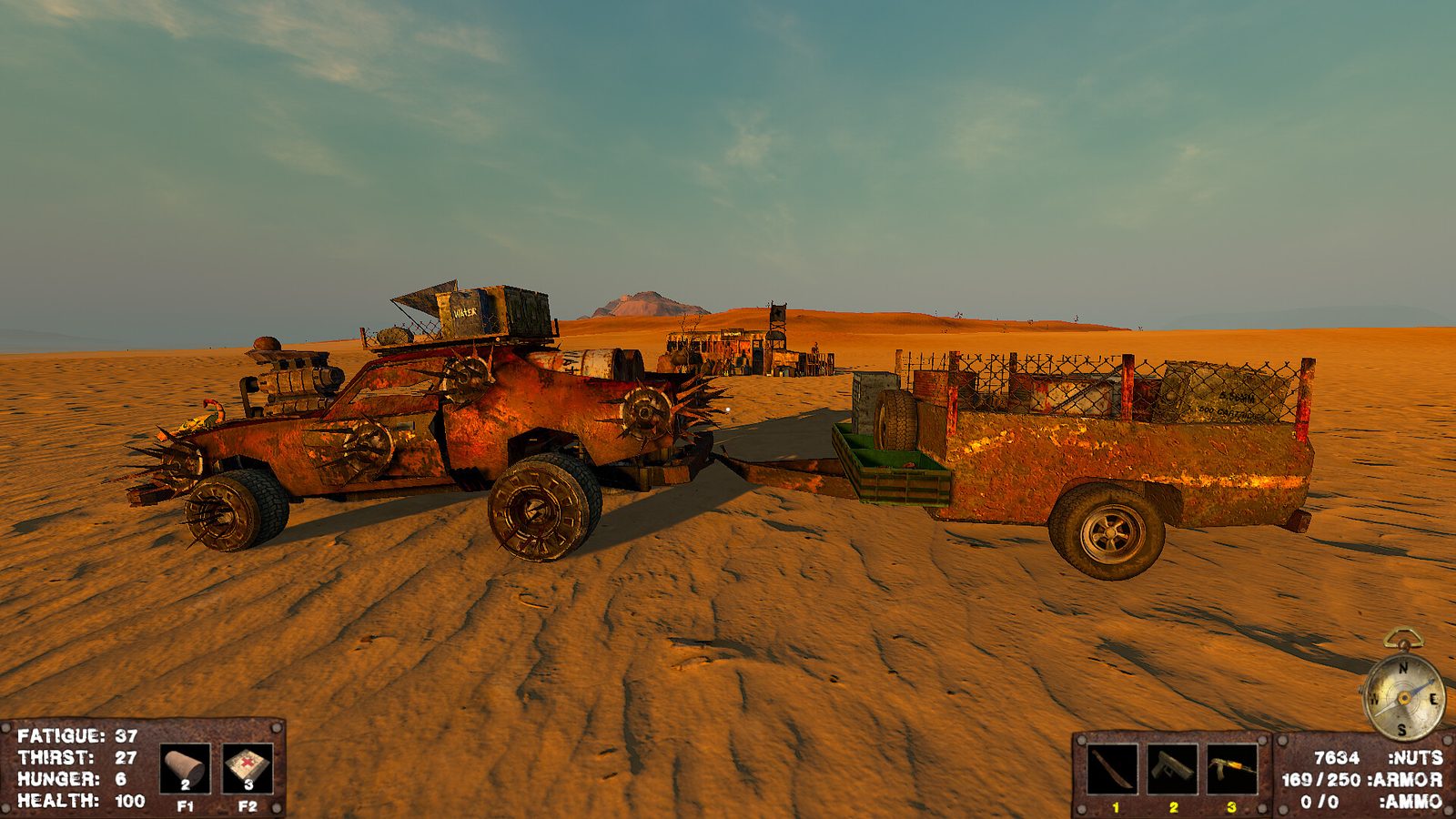
Tires, suspension, wheels
- Tires carry condition percentages. Inspect low-condition tires before a long route and repair or replace worn parts; there is no single percentage here that guarantees a tire will survive every trip.
- Grades exist — tires show tiers (players have reported T1/T2 style grades in loot). Higher grade generally means better grip and durability; conditions matter more than grade day-to-day.
- Suspension takes damage from hard landings and rough terrain; the adjuster tool lets you tweak wheel and suspension geometry after repairs.
Fuel: read the labels
The wasteland has both gasoline and diesel cans. Cars in the demo take fuel you pour in; keep the can type in mind when stocking. Fuel comes from camps, sheds and wrecks, and long routes should be planned as chains of fuel stops, not as one heroic drive.
The maintenance loop that actually works
- Every stop: glance at temperature, oil and fuel gauges.
- Every camp: top up coolant, top up fuel if there is any, check tire condition.
- Every wreck: pull parts — engines, radiators, tires, batteries — even mediocre ones; they are spares.
- After every crash or burrower attack: inspect the front end; radiators and hoods take the hit first.
- Keep a repair box in the car: repairs in the field beat limping to a shop that may not exist.
Car jumps, trailer drops or controls stop responding
| Symptom | Relevant released fix or check |
|---|---|
| Engine or radiator moves as the save loads, making the vehicle jump | October 9 fixes delayed physics locking; update before replacing the component |
| Trailer detaches after loading | October 9 addresses this; the notes retain an exception for an awkward saved vehicle position |
| Cassettes fall out after loading | October 9 fixes their delayed physics lock |
| Small car shakes after a suspension lift kit | September 30 lists a fix |
| V8/V12 supercharger will not detach | September 26 lists a detachment fix |
| Steering, throttle, brake or clutch does not respond | Check the September 30/October 1 control fixes and the further October 9 clutch fix before blaming part condition |
A lift kit deliberately disconnects a trailer when installed. Recheck the connection afterwards. A rear bumper also auto-detaches when a trailer is attached. Those September 26 changes are separate from an unexpected trailer dropping during load.
The hotfixes keep save compatibility, with some fixes taking effect on new objects or a new game. Save-compatible does not promise that every old placed item changes immediately. October 9 notes · customization sequence.
Where the parts come from
| Source | Typically yields |
|---|---|
| Roadside wrecks | Engines, radiators, tires, batteries, scrap |
| Camps (friendly and not) | Fuel, oil, tools, storage crates |
| Traders | Whatever arrived in their randomized stock — buy the radiator you have been hunting |
| Buildings and sheds | Small parts, bandages, food, the occasional adjuster tool |
Parts economy in the demo is generous — you will drown in spare tires before you find the one engine you want. For the released game, compare a found replacement with your repaired vehicle before moving the entire loadout.